
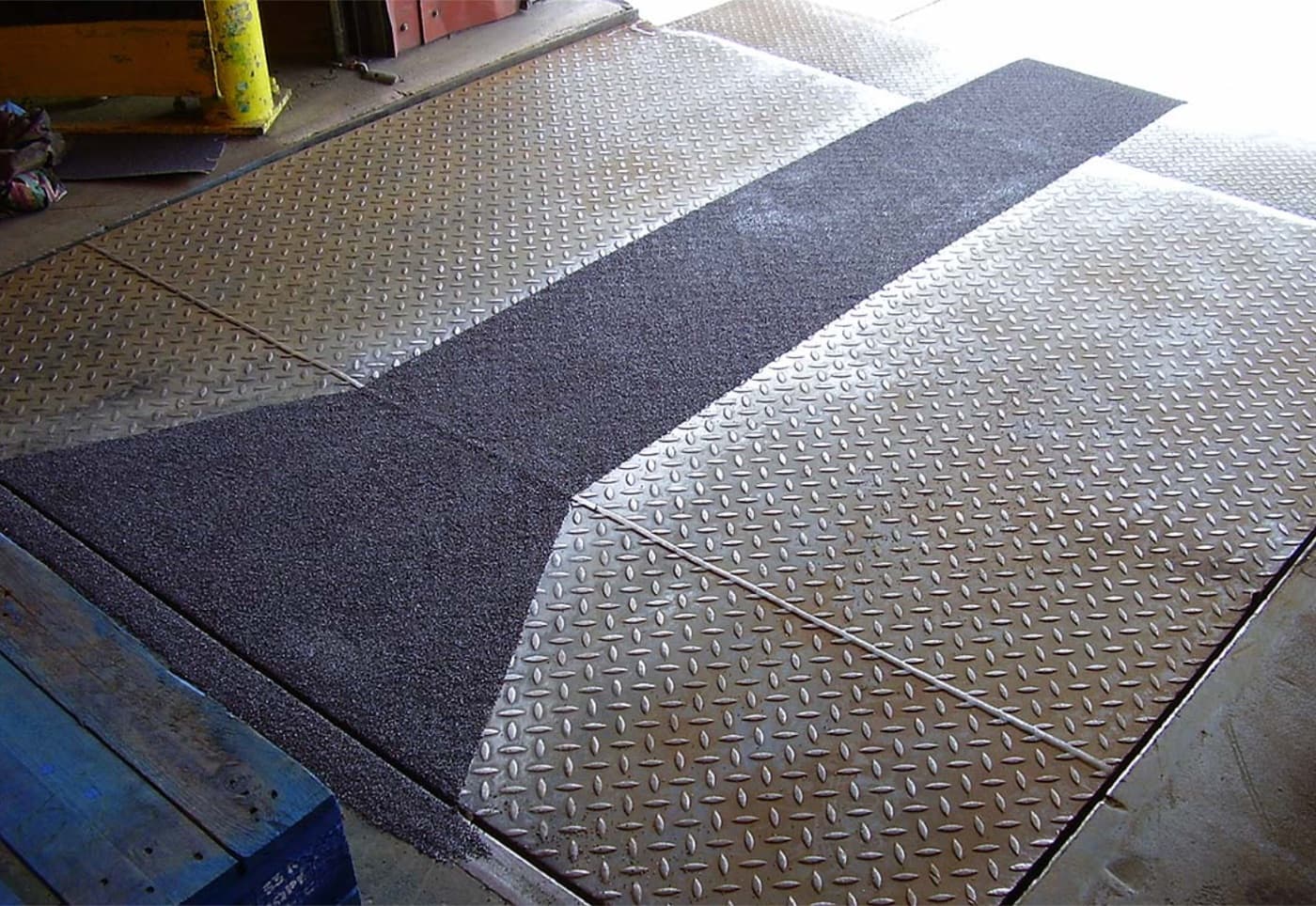
Anti-Slip Safety Flooring
Slip-resistant surfacing for walkways, stairs, platforms, ramps, and vehicle access points.
What Anti-Slip Flooring involves
BHI Coatings crews perform anti-slip safety flooring work for industrial plants in Alvin and across the Texas Gulf Coast.
When a floor loses its footing, the cost shows up in your incident log before it ever reaches your maintenance budget. Aggregate wears smooth, oil tracks in from the process side, and a spill leaves a sheet of product across a walkway your crews cross every shift.
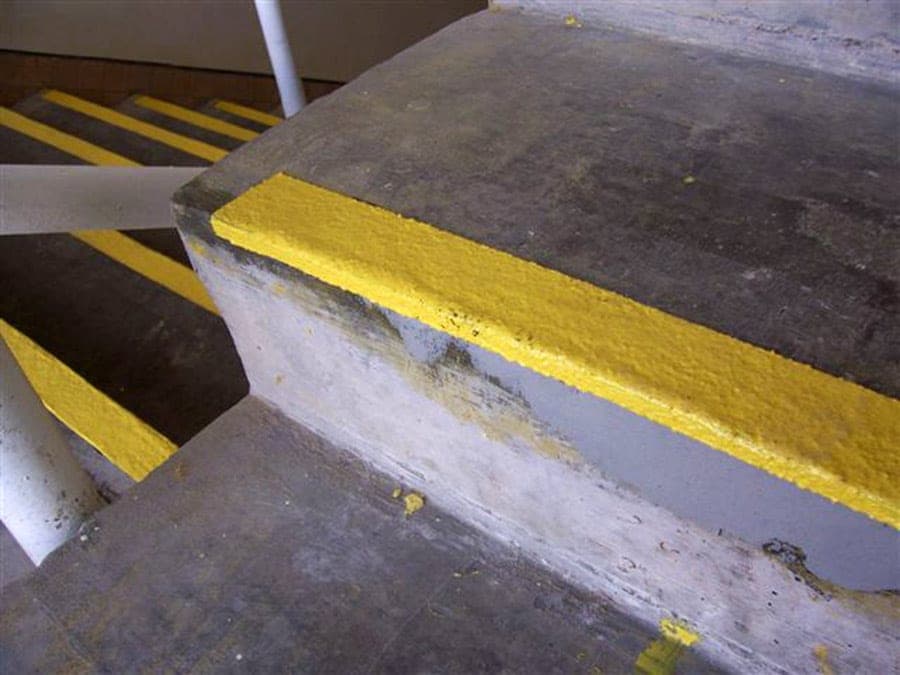
We resurface those areas so they hold grip again. We are factory-trained and factory-certified Belzona applicators based in Alvin, and we have spent decades putting slip-resistant surfacing on the walkways, stairs, platforms, ramps, and access points that move people and vehicles through Gulf Coast plants. We run 24-hour on-call service across the Texas Gulf Coast for refiners, petrochemical producers, and marine operators. The work is cold-applied, with no hot work and no torch on the deck, so the surrounding unit keeps running while we surface the floor.
Walkways, stairs, and access surfaces that lost their grip
This is the bread-and-butter call. Worn aggregate, tracked oil, and process spills drop floors, stairs, and walkways below safe slip resistance, and the fall risk climbs with every pass.
We apply cold-cure safety-grip coatings to floors, stair treads, ramps, ladder rungs, and platform decks. The substrate gets profiled first, the grip gets keyed to the area, and the finished surface reads the same underfoot whether the deck is dry or running wet.
The scheduling advantage matters as much as the grip. These coatings cure cold, so no torch goes anywhere near a live process unit.
We match the texture to the traffic the area actually carries. A pump-row walkway crossed in steel-toes takes a different grip than a ramp that sees foot traffic and the occasional cart. Surfaces reopen to foot traffic quickly, so a stair tower or access landing comes back to your operators without a long shutdown. Belzona 4411 and 5231 carry the slip-resistant aggregate in a coating that bonds to concrete and steel and stands up to the spills that wore the old surface down.
Front-of-house floors that still have to look right
Not every floor that needs grip can wear a bare industrial finish. Control-room entries, lab corridors, lobbies, and other visible areas need slip resistance without reading like a shop floor, and the standard grip coating solves the safety problem while creating a presentation problem in its place.
We apply color-matched non-slip systems that hold slip-resistant aggregate in a finished surface. The floor stays safe where people walk it and presentable where people see it.
We match the color to the space instead of defaulting to gray, so a public-facing area keeps its grip without telegraphing the repair. The substrate prep underneath is the same disciplined work we put under any of our coatings, and that is what keeps the finish bonded and the grip from polishing out under traffic.
Static-dissipative flooring near electronics and flammable atmospheres
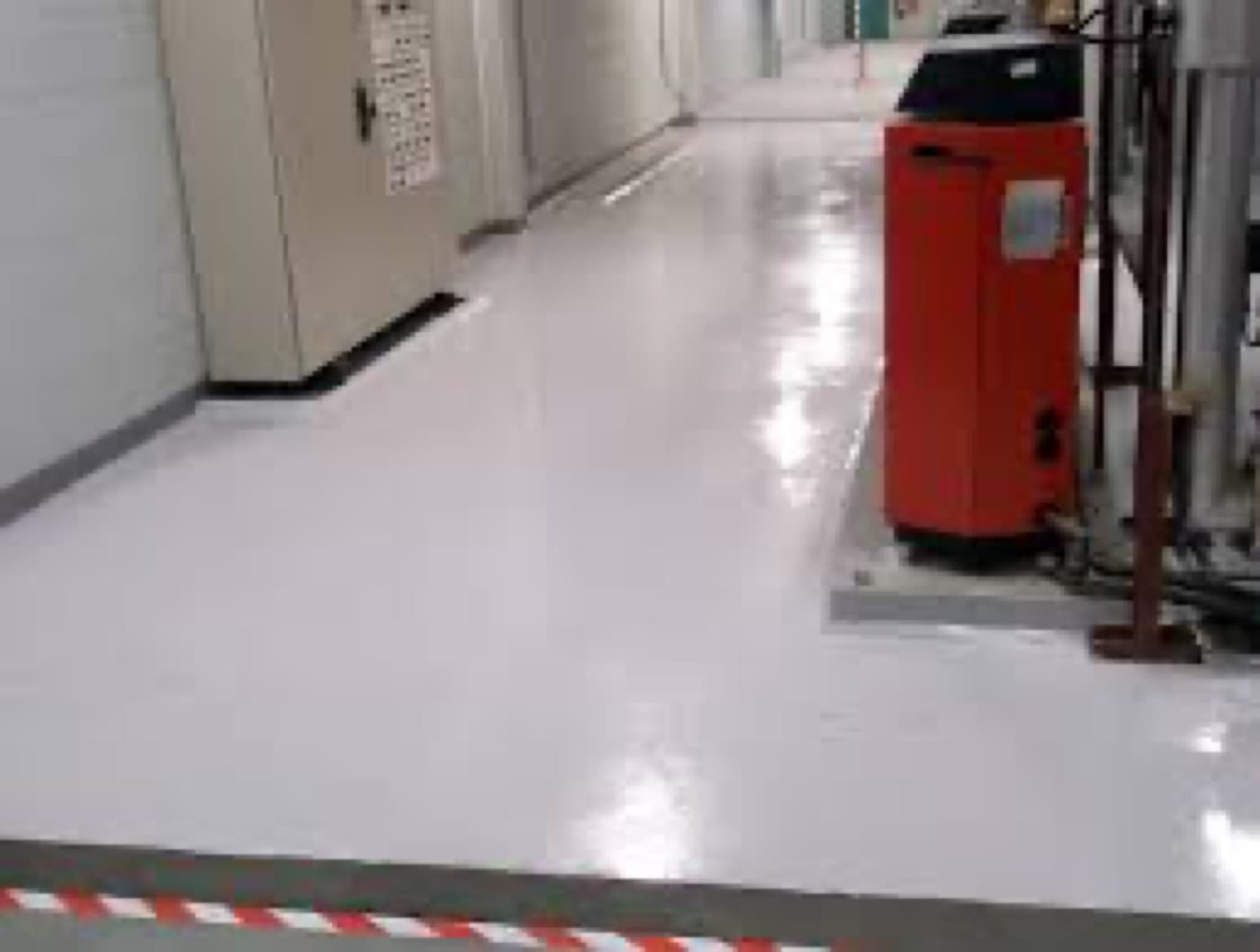
Some floors carry a hazard you cannot see. Static charge builds on insulating floors near sensitive electronics or flammable atmospheres, threatening equipment and, in the wrong room, becoming an ignition source. In those spaces the floor itself has to move charge to ground.
We install static-dissipative floor systems that bleed charge through a controlled path to ground. The system protects the equipment standing on the floor and lowers ignition risk in rooms where a spark is the thing you are designing against.
The grounding path gets built deliberately, because a dissipative floor that is not tied to ground is just a regular floor. This is one of the more specialized surfacing calls we run, and it pairs the same slip-resistance discipline with an electrical job the floor has to do every hour it is in service.
What the unit gets back
Every job here is cold-applied, which keeps the surrounding equipment in service while we work the floor. No hot-work permit for the surfacing itself, and no torch on a deck near a live process.
Walkways and stair towers reopen to foot traffic quickly, so operators get their access back soon after we surface it rather than waiting out a long cure.
The outcome is a floor that holds grip through wet, oil, and traffic, a front-of-house surface that stays safe without looking patched, and, where it is called for, a deck that carries charge to ground. Resurfacing in place extends the life of the original floor instead of forcing a tear-out, and it pulls a fall hazard off your incident log.
BHI Coatings runs 24-hour on-call service, so when a spill or a worn stair drops a high-traffic area below safe footing, the crew is reachable and the area comes back fast.
Applications in Anti-Slip Flooring
Anti-slip walkways and access surfaces
Worn aggregate, oil tracking, and process spills drop floors, stairs, and walkways below safe slip resistance and raise fall risk.
Decorative non-slip finishes
Public and front-of-house floors need slip resistance without the bare industrial look of standard grip coatings.
ESD and static-dissipative flooring
Static charge builds on insulating floors near electronics or flammable atmospheres, risking equipment damage or ignition.
Matched to the service conditions.
What this does for your facility
Related work
The industries where anti-slip flooring is most used, and the capabilities BHI Coatings runs alongside it.
Contact BHI Coatings
Need anti-slip safety flooring?
Tell us what is failing. We respond quickly, and we offer 24-hour on-call service.