
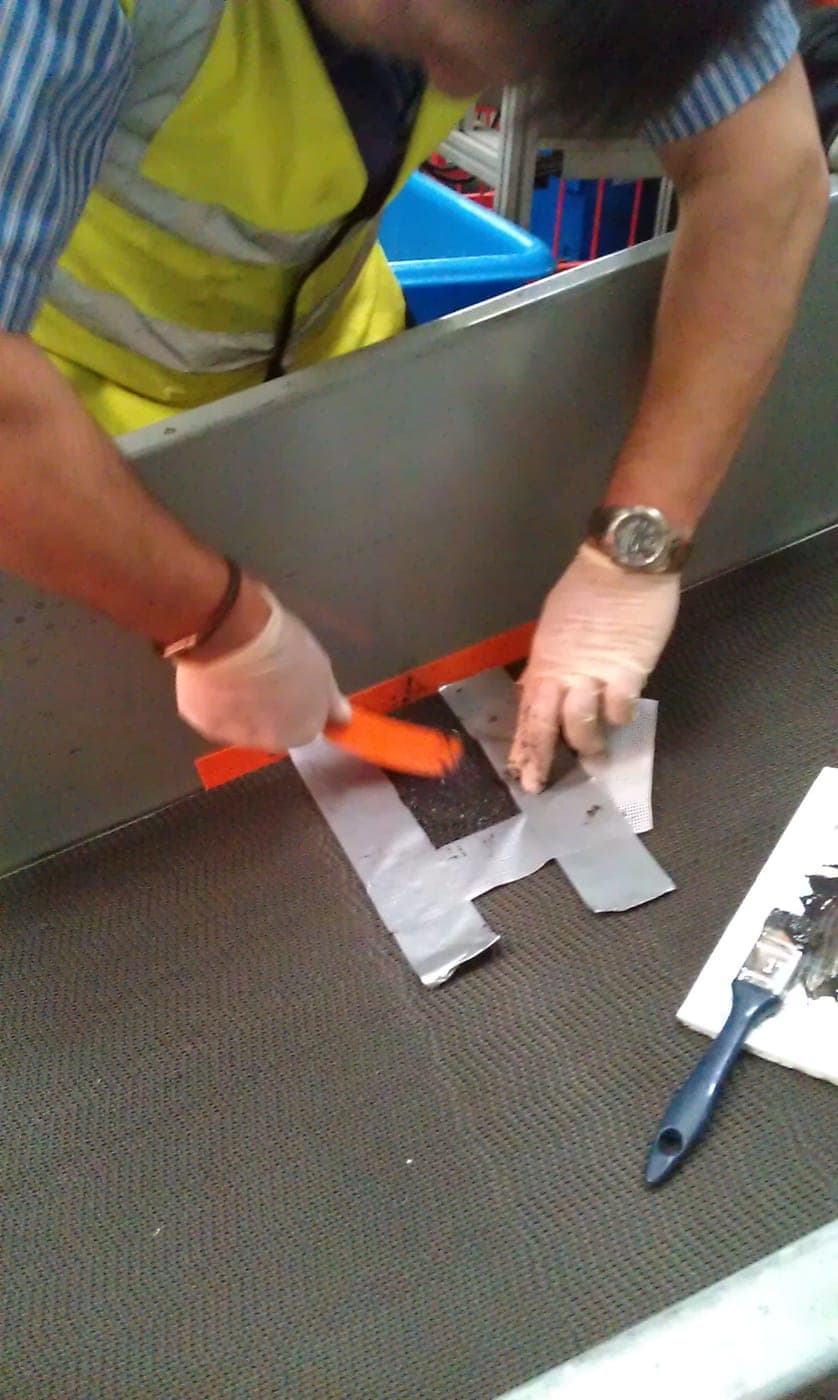
Conveyor belt repair
Gouges, rips, and worn top covers on conveyor belts let cargo escape and spread until the belt is scrapped or the line stops.
The need for conveyor belt repair
BHI Coatings performs conveyor belt repair across Alvin and the Texas Gulf Coast. Gouges, rips, and worn top covers spill cargo along the run and spread fines under the structure. A small tear does not stay small. It migrates until the carcass is exposed and the belt has to be scrapped. A full belt replacement or a vulcanized splice can stop a production line for a shift or more. In aggregate-handling, mining, and port facilities, belt damage is one of the most frequent maintenance events and one of the costliest when the fix requires a full belt change.
How BHI Coatings does conveyor belt repair
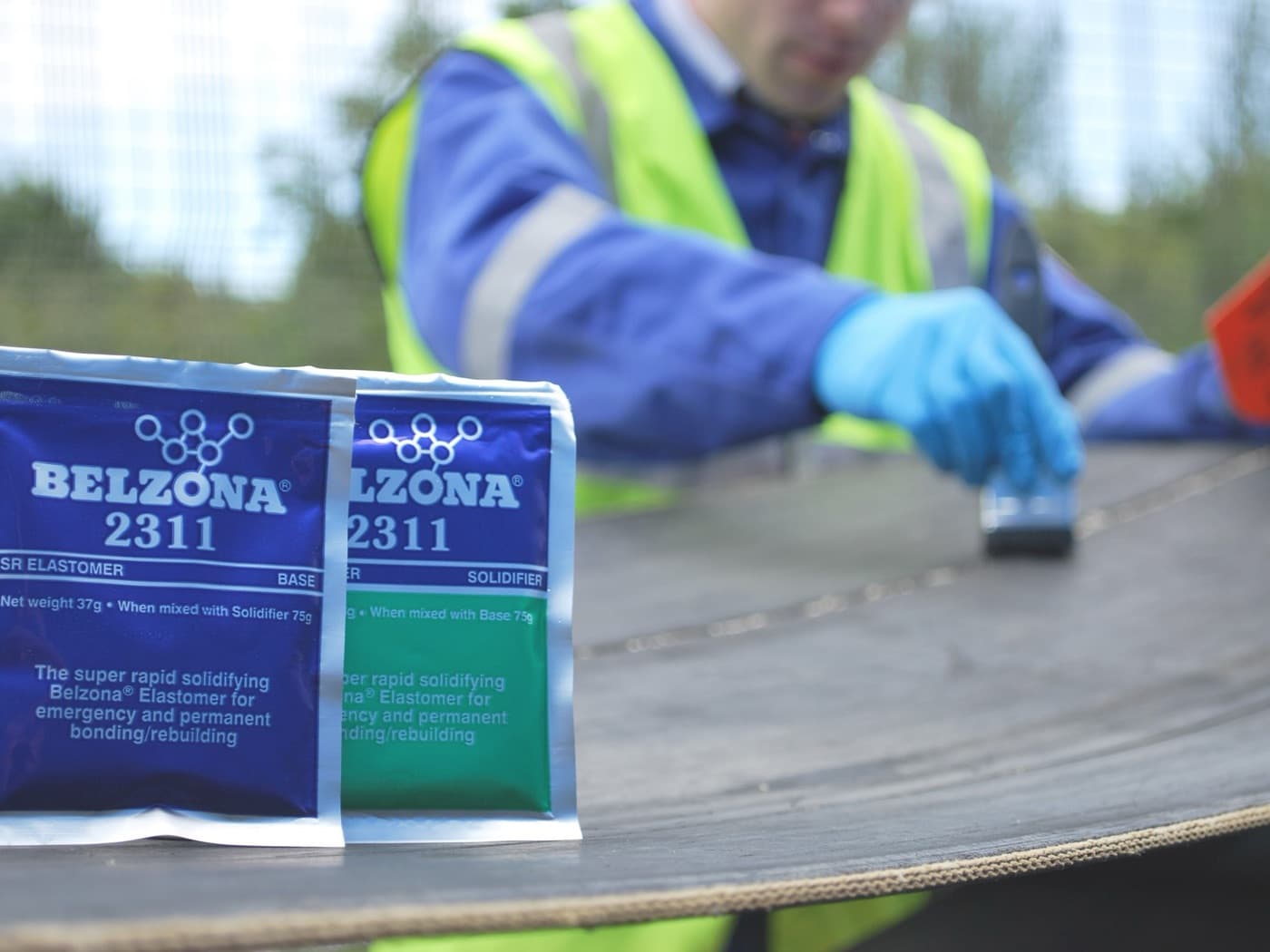
We rebuild the damaged area cold with a flexible repair elastomer that bonds to the existing rubber. The crew grinds out the gouge or rip, removes loose cover and contamination down to sound carcass, then builds the area back to profile with Belzona 2311 or a matched elastomer. No hot vulcanizing press, no splice, and the repair cures at ambient temperature. It works on the run: the belt stays threaded through the conveyor frame and never has to come off. Edge damage and worn skirt-seal contact areas get the same treatment, rebuilt to profile so the skirt seals properly and the spillage stops.
The belt goes back to work with no vulcanized splice and no full replacement. Cargo keeps moving, and the worn top cover is a sealed running surface again. Repair time is typically a fraction of a belt change, and the cold-cure approach eliminates the fire-permit and hot-work risks that come with a vulcanized splice.
More Rubber & Elastomer applications
Sliding and impact wear strips rubber linings off chutes, hoppers, and slurry equipment, exposing bare steel to fast metal loss.
Learn more →Gasket, seal, and shim castingIrregular flange faces and legacy machinery need gaskets, seals, and shims at thicknesses no catalog part matches.
Learn more →Plastic and rubber pipe repairCracks, splits, and worn sections in plastic and rubber pipe leak product and resist conventional metal repair methods.
Learn more →Rubber fender and component repairImpact and abrasion tear dock fenders, skirting, and molded rubber parts faster than replacement parts can be sourced and shipped.
Learn more →Rubber roller and drive-roller recoveringGlazed, worn, or torn roller covers lose grip and traction, causing slip, mistracking, and dropped throughput on drive and feed rollers.
Learn more →All 6 in Rubber & ElastomerThe whole capability in one place, with the work grouped.
See the capability →Contact BHI Coatings
Have equipment that needs to stay in service?
Tell us what is failing. We respond quickly, and we offer 24-hour on-call service.